

Eng



₹199
₹299
33.44% OFF
(All inclusive*)
Paperback
Delivery Options
Please enter pincode to check delivery time.
*COD & Shipping Charges may apply on certain items.
Review final details at checkout.
Looking to place a bulk order? SUBMIT DETAILS
Delivery Options
Please enter pincode to check delivery time.
*COD & Shipping Charges may apply on certain items.
Review final details at checkout.
About The Book
Description
Author
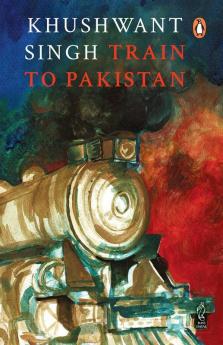
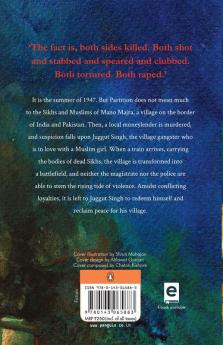
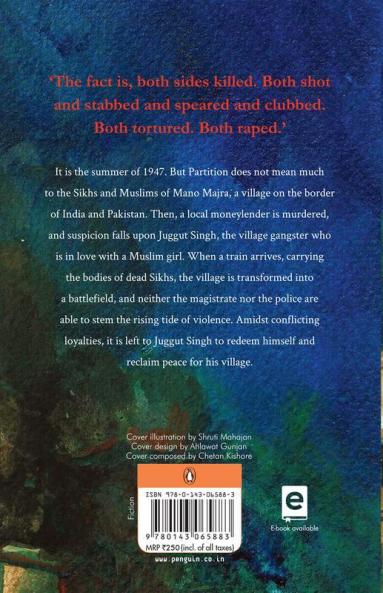
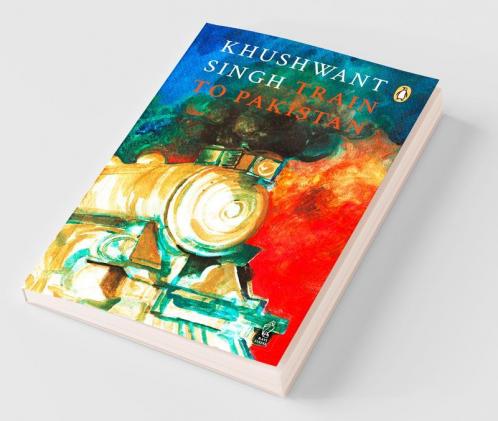
The partition of India was one of the most dreadful times in the recent Indian history. Since 1950s it has time and again been depicted in various media. However while most of those focussed mainly on the socio-political causes and effects the Train to Pakistan is a novel which has captured the essential human trauma and suffering in the face of such a terror and crisis. The novel commences with a description of Mano Majra a little village with Muslim and Sikh population that suddenly becomes a part of the border between Indian and Pakistan. An idyllic and peaceful village Mano Majra resorted to love and harmony even at the face of all odds till external forces come and disrupted all the harmony. The odds start when a train filled with dead bodies of Sikhs and Hindus arrive in Mano Majra. Riots and strikes reached a high with the Sikhs and Hindus being on one side and the Muslims on the other. Torn between them and their vested interests are two peopleJuggut and Iqbal the former being a criminal and the latter being a western educated fellow on a mission to reform the society. Also underlying it is a love story that transcends all religion and odds. Regarded as one of the most heart-rending testimonials of the partition of 1947 the Train to Pakistan is an ideal novel for those who wishes to learn more about Indias past and is looking for more than the socio-political scenario behind the partition. About the Author: One of Indias most acknowledged column-writer and novelist Khushwant Singh was the founder-editor of Yojana and had served as the editor of Hindustan Times the National Herald and the Illustrated Weekly of India. He was also awarded the Padma Bhushan in 1974 but returned it as a protest against the atrocities of the Indian Army on the Golden Temple in 1984. About the Author Khushwant Singh was India’s best-known writer and columnist. He was founder-editor of Yojana and editor of The Illustrated Weekly of India the National Herald and Hindustan Times. He was a member of Parliament from 1980 to 1986. He was awarded the Padma Bhushan in 1974 but returned the decoration in 19984 in protest against the storming of the Golden Temple in Amritsar by the Indian Army. In 2007 he was awarded the Padma Vibhushan. He passed away in 2014 at the age of ninety-nine.

Piracy-free

Assured Quality

Secure Transactions

Fast Delivery

Sustainably Printed
Details
ISBN 13
9780143065883
Publication Date
-10-02-2009
Pages
-198
Weight
-145 grams
Dimensions
-129x198x12.18 mm
Imprint
-Penguin Random House
