

English


₹399
(All inclusive*)
Paperback
Delivery Options
Please enter pincode to check delivery time.
*COD & Shipping Charges may apply on certain items.
Review final details at checkout.
Looking to place a bulk order? SUBMIT DETAILS
Delivery Options
Please enter pincode to check delivery time.
*COD & Shipping Charges may apply on certain items.
Review final details at checkout.
About The Book
Description
Author
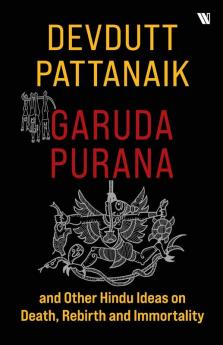
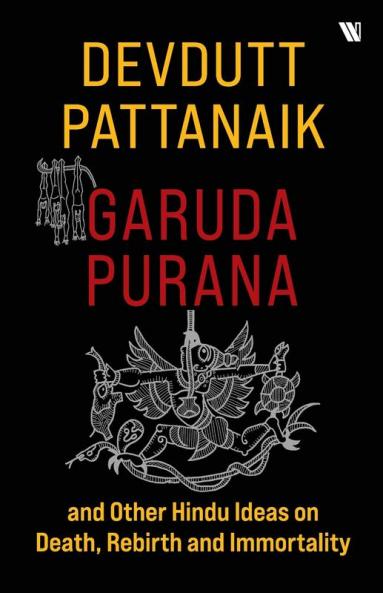
A DEEP AND PROFOUND INSIGHT INTO THE GARUDA PURANA AND THE HINDU CONCEPTS OF DEATH, REBIRTH, AND IMMORTALITY. Why do Hindus feed their dead ancestors? And why do they prefer burning the dead to building tombs? Does Hinduism have no concept of Judgment Day? What is the impact of death on its notions of womanhood and caste? Is the Vedic approach to death different from the Tantric one? The idea of death and rebirth is embedded in the Hindu mind through ritual and story. Death is not just tragic but ambiguous too. For instance, it is the end of one journey, but it is also the beginning of another. Similarly, while it is true that the ancestors are venerated and fed posthumously, death is also considered inauspicious, a source of impurity. There are a variety of rituals that seek to address these ambiguities, provide comfort to the living, and deliverance to the dead. In Garuda Purana and Other Hindu Ideas on Death, Rebirth, and Immortality , Devdutt Pattanaik explores the many concepts around death across the spectrum of Hindu puranas and mythology. Bhuta, pishacha, preta, pitr, and vetala make their appearance in this study, as do Yama, Hanuman, Kaal-Bhairav, Ram, and other gods, as well as lesser beings. The book is a unique inquiry into the inevitability that is death—but equally, it is a guide for the living on the choices we make. About the Author Devdutt Pattanaik is an Indian physician turned leadership consultant, mythologist, and author whose works focus largely on the areas of myth, mythology, and also management. He is the former chief belief officer of Future Group, one of India's largest retailers. He writes a column for the newspaper Mid-Day.

Piracy-free

Assured Quality

Secure Transactions

Fast Delivery

Sustainably Printed
Details
ISBN 13
9789395073448
Publication Date
-25-07-2023
Pages
-176
Weight
-215 grams
Dimensions
-140x216x9.53 mm
